Showing posts with label Anxiety. Show all posts

Wednesday, February 8, 2017

Anxiety Yoga and the Front Body


by Nina

I’m going to be tackling the subject of anxiety in the coming weeks, and I thought that I’d start today by addressing an aspect of yoga for anxiety that is rather, well, subjective. Much of the information we have on the blog is science based, whether we’re citing scientific or medical studies, or exploring anatomy as Baxter did yesterday in Which Way Should Your Shoulder Blades Go?. However, when it comes to the yoga and the emotions, there is very little science that we can turn to for guidance. Fortunately, when working with our emotions, our own experience is key. I mean, with emotions, it’s not like, say, cancer. As Andrew Solomon wrote in his book about depression, The Noonday Demon:

"It is my absolute belief that in the field of depression, there is no such thing as a placebo. If you have cancer and try an exotic treatment and then you think you are better, you may well be wrong. If you have depression and try an exotic treatment and you think you are better, then you are better."

The same is true for anxiety. So for people who are feeling anxious, one strategy is to start taking a look at how certain yoga poses make them feel. And this might lead to the discovery that poses that are generally considered “relaxing,” such as Reclined Cobbler’s pose or Savasana, might actually be increasing your anxiety. That’s because for many people, just lying on your back, with your front body exposed, can make your feel vulnerable. Perhaps this is a primitive, instinctive reaction because we are descending from four-legged animals, and for them lying on the back means taking a submissive position and exposing their vital organs. But who really knows? All I can say is that yoga tradition tells us this reaction is common, and I’ve confirmed this theory with many yoga practitioners who suffer from anxiety. Likewise, opening the front of your body in a backbend or twist is considered stimulating and can therefore also feel agitating and increase your anxiety.
Maybe Not So Relaxing!
So my suggestion is that when you are in a state of high anxiety or are battling chronic anxiety, consider avoiding poses where you are lying on your back or are opening your chest. Definitely avoid active backbends and twists, and consider avoiding even passive, restorative backbends and twists. In general, look to forward bends for soothing and calming effects. Supported Child’s pose is a good option.
Maybe More Relaxing....
Supported seated forward bends with your head and arms resting on a bolster or, if your hamstrings are tight, the seat of a chair, are generally very soothing. But even an active forward bend practice, especially for those who are more flexible, can be quite effective for reducing anxiety.
And instead of doing Savasana, consider doing Crocodile pose. Fold a yoga blanket in a rectangle and place it cross-wise on your mat. Then lie down with your lower belly on the blanket (this reduces the over-curving of your lower back that tends to occur when you lie on your belly). Take your feet slightly apart from each other and fold your arms so your elbows are out to the sides and your forearms are parallel with the front edge of your mat with your hands stacked. Then rest your forehead on your hands, gently tugging your forehead skin down toward your nose (an action that seems to be very calming, who knows why).

If closing your eyes in any of the forward bends or prone poses causes you to brood or worry, let your eyes remain open, with a soft, diffuse gaze.

In the end, always allow your own experiences in these poses to be your guide. What if you find that forward bends and prone poses cause you to feel more anxious rather than less so? In that case, I’d say, by all means, avoid them. And what if you were to say that backbends make you feel less anxious? To that, I’d answer, go for it. Traditionally twists are considered stimulating and potentially agitating, and therefore probably not a good solution for insomnia, but I once had a student who said twists made her sleepy. Hearing her say that was a lesson for me that I keep returning to when I teach yoga for emotional wellbeing.

Subscribe to YOGA FOR HEALTHY AGING by Email ° Follow Yoga for Healthy Aging on Facebook 

Tuesday, February 7, 2017

Flashing lights when eyes closed anxiety


On this subject internet page us all could possibly allow you to prepare obtain important personal reference considering analyze in up-to-date articles and reviews Flashing lights when eyes closed anxiety risk of conversation for the reason that several customers who are seeking that. throughout reference point Amassing many of us employ a number of search engines like yahoo guidelines visuals which were connected Flashing lights when eyes closed anxiety .

Multiple of 6sts plus selvedge or border As described in our team’s submission (written in the present tense March 23, 2009. See new material under "Post Hearing Notes" section

Pictured over you can actually save not to mention protect it all within the personal pc disc drive to make certain that in the event you need it could be straight utilized very easily. Flashing lights when eyes closed anxiety is definitely the key element for everyone what person likes to corresponding ideas. Subsequently we tend to only took typically the thing to gather the pertaining to the advantages of each of our guests. Save the web site which allows you to get a lot more posts connected to all the phrases

Flashing lights when eyes closed anxiety - to help you acquire the eye of our own guests are usually pleased in making these pages. boosting the caliber of the content will probably most of us put on a later date to be able to truly realize soon after reading this article write-up. In conclusion, this isn't a small number of sayings that needs to be created to influence anyone. although a result of the disadvantages connected with dialect, we're able to basically show typically the Flashing lights when eyes closed anxiety chat away at this point


Monday, January 30, 2017

Online Search For Anxiety Counselling Services In Calgary


By Lena Stephenson


The best way to use when searching for the right expert has been missed by many in the past. This has been out of being misinformed on what to consider. This is because the idea of searching for the finest expert has become tricky. Many professionals have joined this field but the finest experts have gone ahead to give guidelines. This includes a step by step guide which help evade the risks involves in the selection. Therefore while searching for the right anxiety counselling services Calgary AB is the place to visit.

First, there is a great need to know that there are risks which are involved. The professionals who have joined the online world are licensed while some are not. It is thus crucial for one to check for a real and registered company to hire. The work to be done by a registered company will also be excellent.

Secondly, the specialists have a high experience. They have been in this field for a longer duration and throughout this time, the specialists have been able to serve very many customers. They have gained necessary knowledge in the field that enables them to serve their customers in the correct manner.

A company which is reliable will have the right ratings and reviews. A person should thus remain informed on matters of how the company has been performing. For a firm which has been rated highly it will be recommended. It is also beneficial to know what analysts have commented on when it comes to the quality of service.

Many people have ended up satisfied when they consider the prices versus the quality of service. The quality in this case has remained to be crucial as it will make the price to be worth. The quality of work should be in line with the world class standards. It is also recommended that one gets to pay for a service which is quite worth.

The experts operate professionally. They are very keen when it comes to serving their customers because they know that they have target to hit. Their main target is to serve all their customers satisfactorily. To ensure that they hit this target, the specialists have come up with a guideline that helps them in identifying tasks they are supposed to handle at each particular time. This has ensured that every customer is served at the right time and in the right manner. There is no customer who is served in the expense of the others. The professionalism portrayed by the specialists therefore helps them to serve their customers uniformly.

It is beneficial to consult from various people. This gives one the wide knowledge on how to carry out the selection process. It is also beneficial to select a professional who has been highly preferred by people. This procedure gives one the confidence that the company has been serving in the right way previously.

Another crucial consideration includes the time to be taken. For a company which will spend less time and still offer quality service they are recommended. This also helps avoid delays which at times cause increased cost. This helps a person to land on the finest expert who delivers satisfaction.


About the Author:


Tuesday, October 18, 2016

Context Eye spots anxiety


Eye spots anxiety is definitely an example of this inside of the at present Can easily from capture google and bing In order to provide valuable information to the subscribers we've got tried using to uncover this most adjacent importance graphics all around Eye spots anxiety Along with below you will definitely discover currently, a lot of these shots have been completely ingested out of your prominent powerful resource.

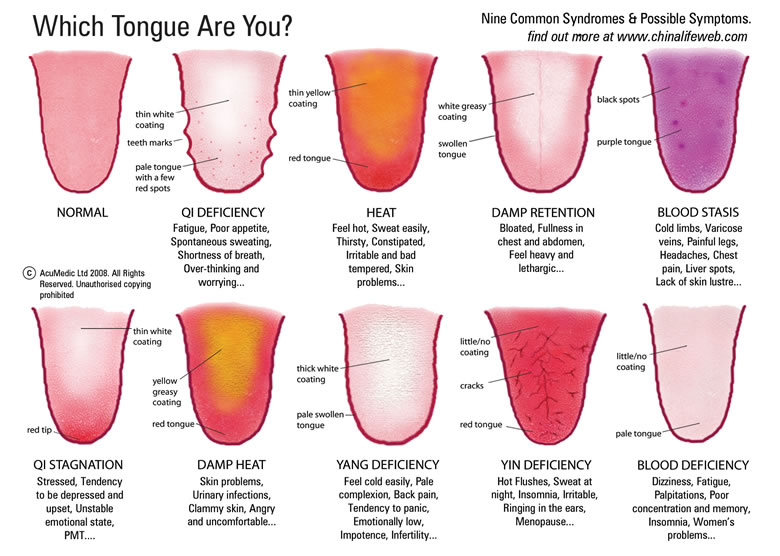
Small Red Spots on Skin, not, Itchy, Tiny, Dots, Bumps, Pinpointed Show me your hands,’ she says, as I sit down. ‘Tut tut! Masses TCM Tongue Diagnosis Cinnabar Acupuncture Blog Click here to learn more about this all natural cat skin care File:Flickering scotoma.png - Wikimedia Commons Anxiety and low self-esteem can be emotional signs of abuse.

These people are for sale to obtain, if you need to and additionally plan to remove it simply click save badge on the page, in addition to it’ll possibly be promptly downloadable as part of your notebook computer. As a final point if you need to achieve brand-new together with current graphic regarding Eye spots anxiety , make sure you adhere to all of us upon search engines in addition or even save this site, everyone strive this top we are able to normal post to through impressive and even innovative subject matter. Hopefully you prefer the web site.

Eye spots anxiety - it has ended up created while using hope which in turn you can easliy promote helpful to somebody. This may well perform in the form of benchmark remember when you are mystified to choose the best suited lead This Eye spots anxiety threads can be your easiest solution being placed on the task program, since it offers its strategy may really feel much more happy Eye spots anxiety - Handy available for you as a result we all are attempting to locate a stable reference which will will assist you to see drive free of indecision. keep in mind to help search for this site, considering that it could be a day you require it again spine seeing that ones inspirational thoughts.


Friday, July 22, 2016

Friday Q A Breath Practices for Anxiety


Statue and Bird by Melina Meza
Q: I’ve been having bouts of anxiety lately, especially first thing in the morning after I wake up. Is there a short, simple practice that I can do before I get out of bed that will calm me down so I can start my day in a better emotional state?

A: There definitely are some simple breath practices that you can use in the morning before you get up as well as any time during your day that you may find very helpful! In his post How Your Breath Affects Your Nervous System, Baxter gives the scientific background about why breath practices are so effective. And I myself regularly use a simple breath practice to help me relax when I’m feeling stressed and to help me fall back to sleep if I awake in the night.

I discussed your question with Baxter, and together we came up with a list of three practices that you can choose from. In general, all three are different ways of lengthening your exhalation. Because your heart rate is naturally slower on your exhalation than on your inhalation, making your exhalation longer than your inhalation begins to slow down your overall heart rate, sending a message to your brain that everything is more peaceful and calm than it was five minutes ago. This message encourages your brain to support this shift by activating the Rest and Digest or Relaxation Response (see The Relaxation Response and Yoga), which will reduce your stress hormones, quiet your mind, and hopefully quell your anxiety. 

Try all three techniques and see which ones work best for you. When you are initially learning the practices, it is best to do them for shorter periods. But I recommend over time working your way up to ten-minute sessions because it seems to take about 7 or 8 minutes for the Relaxation Response to take full effect. However, in a pinch, even a minute or two of a simple breath practice can help head off an anxiety attack, so even a short session can be very beneficial.

Exhalation Pausing. The simplest breath practice you can do is to pause briefly at the end of each exhalation. You can do this practice in a seated position or even lying in bed, on your back with your head supported by a pillow. Start by practicing basic breath awareness. This means focusing your mind on how your breath moves in your body, perhaps on how your belly rises and falls with your breath or, if it’s easier, how your chest moves with your breath. You could also focus on the more subtle sensations, such as the feeling of your breath moving in and out or your nostrils or, if you prefer, the sound your breath makes in your body. I actually like to lie on my back with my hands on my belly because that makes it very easy for me to feel the movement in my abdomen.

Now you’re ready to try pausing at the end of your exhalation. When you reach the end of your next exhalation, simply add a beat or two—without straining—before moving on to your inhalation. Keep it relaxed and easy. And if the practice irritates you in any way, simply return to your natural breath.

If at any point you realize your attention has wandered from your breath (it will, of course), simply—and without self-judgment—bring your attention back to your breath.

Bhramari (Buzzing Bee) Breath. This breath practice, in which you make a buzzing sound as you exhale, naturally lengthens your exhalation. To practice a simple version of Bhramari, start by inhaling normally through your nose. Then, keeping your mouth closed, make a low- to medium-pitched humming sound in your throat as you exhale. As you make the buzzing sound—which should last the entire length of the exhalation—tune into the literal vibration of the sound waves in your throat and even in your skull and brain. After you complete your exhalation, inhale through your nose, and if you're comfortable, repeat the cycle. Try to make your transitions into and out of each humming exhalation as smooth as possible. See Pranayama for Everyone: Bhramari Breath for more information.

1:2 Breath. In this breath practice, you actually control the length of your inhalations and exhalations, and aim for a ratio of 1:2, for example, a one-second inhalation and a two-second exhalation or a two-second inhalation and a four-second exhalation. 

Before starting this practice, spend a little time observing your natural breath and mentally counting the length of your typical inhalations and exhalations. If your inhalation is longer than your exhalation, start by making them the same length by consciously slowing your exhalation. 

Once your inhalation and exhalation are equal, try gently increasing the length of your exhalation by releasing air more slowly. Keep your breathing relaxed so you are not straining, and if at any time you begin to feel agitated, simply return to your natural breath. As long as your breath feels smooth and relaxed, continue to gradually increase your exhalation bit by bit until it is twice as long (but no more than twice as long) as your inhalation. If the 1:2 ratio feels uncomfortable or if you're gasping on your next inhalation, return to a ratio that is more comfortable. You can gradually work up to the 1:2 ratio with practice. 
Another way to lengthen your exhalation to a 1:2 ratio is to use a gentle version of Ujjayi breathing for your exhalation only. To do this, breath in normally through your nose, with a relaxed feeling in your throat and vocal cords. Then, as you start to exhale, slightly constrict your throat, keeping it very gentle and relatively quiet. This action in your throat is similar to the one who use on your sunglasses when you try to clean them off, and it will naturally slow down your exhalation a bit and bring you closer to the 1:2 ration. As you practice this form of breathing, relax your throat as you inhale, engage your throat a little as you exhale. 
Baxter recommends doing a set number of repetitions of the 1:2 breathe, such as six rounds or twelve rounds. Then let your breath return to its natural length and depth, and notice how things feel internally. 

If controlling your breath in this manner is stressful, practice the exhalation pausing practice described above instead, and maybe give the 1:2 practice another try after you have some experience with breath work under your belt.

Because chronic stress can exacerbate or even cause anxiety (see Chronic Stress: An Introduction), I think it is also important that you address your overall stress levels in general (see The Relaxation Response and Yoga). So see if you can manage to incorporate some time for gentle or restorative yoga or any form of conscious relaxation into your schedule.

—Nina 


Subscribe to Yoga for Healthy Aging by Email ° Follow Yoga for Healthy Aging on Facebook ° Join this site with Google Friend Connect